
Physical Therapy near Isle of Palms, SC
Accidents are a part of life that can happen anytime, anywhere. Whether it's at work, home, or on the road, injuries often follow. According to the CDC, there were more than 38 million injury-related visits to the ER in 2020. However, not all injuries require the same kind of treatment. Minor sprains and bruises can often be treated at home with rest, ice, and elevation.
More severe injuries require ongoing care like sports rehab and physical therapy in Isle of Palms, SC. Physical therapy, which is a combination of physical exercises and education, has remarkable benefits for those who are injured or in constant pain. For many patients, physical therapy is the key to a pain-free life where joints and muscles don't ache and everyday activities are easy to accomplish without constant worry and debilitating pain. That's where Premier Physical Therapy shines – to help you live life free of the aches and pains setting you back.
Service Areas
Premier Physical Therapy Working Together as a Team
Biomechanics is the scientific study of how we move. Our body is like a well-oiled machine, where each part works together in harmony. At Premier Physical Therapy, we have built a team that mirrors this approach - working together with you to ensure you can get moving ASAP.
While your diagnosis and symptoms provide us with a solid starting place to provide relief, we take a holistic approach to your treatment. We treat you as a whole person, ensuring that you can perform at your best when it comes to work, play, and everyday life. After all, God designed us to move as we please, which is why often prescribe exercise as the best medicine out there.


A Unique Approach to Physical Therapy in Isle of Palms, SC
Premier Physical Therapy is not your ordinary physical therapy center. We separate ourselves from other physical therapy offices with an inherent belief that God's Will is to see each and every person suffering from physical ailments return to the best shape possible. We believe it's our job to make sure His Will is seen through. To ensure we do so, our physical therapy center is equipped with the most advanced technology and knowledgeable staff in South Carolina.
Some of the most popular services we offer at our physical rehabilitation office in South Carolina include:
- Physical Therapy
- Alter-G Treadmill
- Aquatic Therapy
- Sports Rehab for Athletes
Our Mission
At Premier Physical Therapy, we strive to use our abilities to help others and honor God. We believe that each person has unique gifts that they can use to make a positive impact in the world, and for us, that gift is the ability to heal and serve people through advanced physical
therapy techniques and technology. Whether you are dealing with a minor injury or a chronic condition, we are here to help you feel better and improve your overall well-being.
Now that you know a little more about our mission, let's take a closer look at the services offered at our physical therapy center.
Elevating the Art and Science of Physical Therapy in Isle of Palms, SC
Our services are focused on helping individuals alleviate any physical discomfort they may be experiencing by working in tandem with their bodies. Physical therapy is a unique combination of both science and art, and our team of experts is well-versed in both aspects to ensure that regardless of your symptoms or diagnosis, you receive the best care possible.
Our understanding of human anatomy is second nature to us, but we also understand that each person's body is unique. Thus, we approach each case with a willingness to adapt and tailor our methods to your specific needs, enabling you to get back to living your best life once again.


Physical Therapy Customized to Your Needs and Goals
Premier Physical Therapy works with you to develop a personalized rehabilitation program that caters to your specific needs and objectives. Whether you are suffering from the fallout of shoulder surgery, knee replacement surgery, or your back has artificial discs, you deserve a customized rehabilitation plan.
That's why we create specialized plans for every one of our clients – we never provide treatment based on someone's general characteristics or levels of pain. Plus, unlike many physical therapy centers, our team undergoes advanced training in the Mulligan Concept and McKenzie Method. The bottom line At Premier Physical Therapy, you can rely on receiving compassionate, complete support using the latest physical therapy techniques and equipment, such as dry needling.
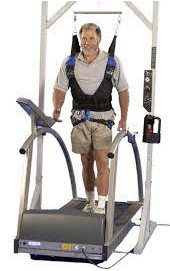
We also utilize technologies such as the Alter-G Unweighting System and Pneumex Unweighting System.
The Pneumex unweighting system is designed to decrease pain and increase strength by providing controlled, precise, weightless motion for the spine or injured joint. Premier Physical Therapy is the sole provider in the Isle of Palms, SC, area to offer this pain-free Pneumex technology.

Our physical therapy clinic provides relief for nearly every area of your body, including your:
- Back
- Shoulders
- Neck
- Jaw
- Spine
- Hips
- Ankles and Feet
- Knees
- Elbows

Our team of practitioners also provides care for diseases and disorders, such as:
- Arthritis
- Fibromyalgia
- Plantar Fasciitis
- Multiple Sclerosis
- Chronic Pain Disorders
- Parkinson's
From high-level sports injuries to painful sprains, you can rest easy knowing that relief is just around the corner when you book an appointment with Premier Physical Therapy.
Reduce Impacts and Reimagine Rehabilitation with the Alter G
The Alter G treadmill is a remarkable piece of technology that helps reduce the impact of exercise and aids in smooth rehabilitation after surgery or injury. It is especially useful if walking, jogging, or running causes pain during recovery from physical ailments. Alter G treadmills are preferred by leading medical professionals and the world's best athletes and sports teams.
Originally developed at NASA and tested at Nike's Oregon Research Project by America's top distance runners, the Alter G was considered revolutionary when first produced. Today, it remains incredibly effective and exists as the only FDA-approved device of its kind.
Top 3 Benefits of Alter G Treadmills for Physical Therapy in Charleston
One of the most common questions we get at Premier Physical Therapy about Alter G treadmills is whether they really work or not. We get it – antigravity technology may seem out of place in a custom physical therapy program. The truth is that Alter G provides patients with an exciting, effective, and proven way to improve their workouts and recoveries. Here are just a few of the biggest benefits of using antigravity treadmills at our physical therapy office:

Running on a traditional treadmill is a popular exercise, but it can also cause harm to your bones, joints, and muscles due to the high stress and pressure on your body. Antigravity treadmills solve this issue by using unweighting technology to help users achieve their desired workout. The AlterG can unweight up to 80% of a user's body weight, reducing stress and shock on the lower body
By wearing specialized shorts and entering the air chamber surrounding the Alter G treadmill, the machine can be calibrated to pressurize the chamber and unweight users, allowing them to run without pain and without interfering with their natural gait mechanics. This technology isn't just for athletes. It can be used for a range of physiotherapy needs, whether you're recovering from knee surgery or simply want to run without harming your knees as much.

The Alter G treadmill provides a painless, low-weight exercise for patients in early recovery. Studies show it reduces muscle atrophy and swelling and improves post-surgery results. It helps you recuperate faster and improves cardio fitness, range of motion, and strength while reducing the harmful effects of gravity. Going through recovery doesn't mean you have to waste away on the couch. Instead, you can stay active and exercise with the painless treatment Alter G from Premier Physical Therapy in South Carolina.

The Alter G treadmill may sound intimidating, but it is a safe and comfortable experience for helping patients recover from injury or surgery. While using the Alter G, you will be surrounded by a safety bar that can be used for support and balance. A clinician from Premier Physical Therapy will be present to guide you through your run, adjusting your speed and pressure to create the ideal running experience. Patients who use the Alter G Treadmill can focus on getting the most out of their workout rather than worrying about falling or joint pain.
Stay Active with Aquatic Therapy
Depending on your pain symptoms and goals for physical therapy in Isle of Palms, SC, aquatic therapy can provide your body with immeasurable benefits. It all starts when by heating our pool to 92 degrees, to maximize your workout and keep your muscles warm. In fact, at Premier Physical Therapy, we're proud to provide patients with the warmest pool in Charleston. When you use our aquatic therapy technology, you have access to two underwater treadmills and also a pair of swim jets. Plus, we can provide accessories such as weights, jog belts, steps, and even resistance bands.
Benefits of using our aquatic therapy clinic include
- Decreased Muscle Guarding
- Reduced Pain
- Un-Weighted Joints
- Much More
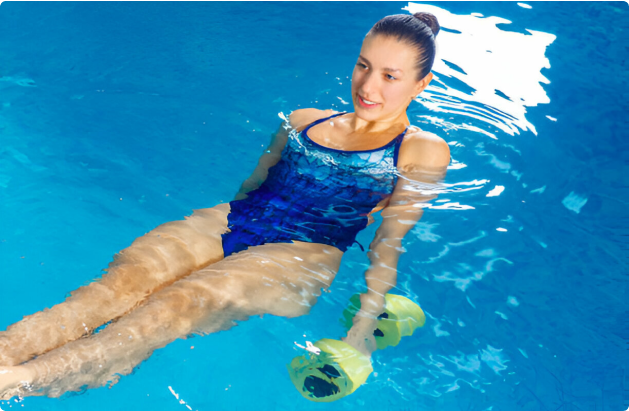
Why Choose Aquatic Therapy

5 Reasons to Consider Aquatic Therapy from Premier Physical Therapy
Aquatic exercises from our physical therapy office is about more than just swimming laps. It is an effective and safe form of physical therapy that uses evidence-based techniques to help you feel and move better, whether you're 25 or 65. Curious why you should consider this service? Keep reading to find out.

Reduced Risk of Falling
Certain patients who experience problems with balance and stability might not be suitable for physical therapy on land. However, aquatic therapy decreases the likelihood of falls and fall-related injuries, enabling them to exercise and recover in a secure environment. With time, balance issues can be resolved, and confidence can be regained.

Coordination and Balance Improvements
To piggyback off of our last point, aquatic therapy is a type of physical therapy in Isle of Palms, SC, that can help patients improve their coordination and balance. This, in turn, can reduce their risk of falls outside of the pool. The water used in aquatic therapy slows down movement and prevents falls, which gives patients the time they need to regain their posture if they get off balance. Research has shown that hydrotherapy can be particularly beneficial for older patients, as it can help them improve their balance and recovery. As a result, they may become less fearful of falling and more confident during physical activities.

Less Stress on Your Joints and Bones
When a patient is immersed in water up to their neck, their body weight is reduced by nearly 90%. This buoyancy helps to decrease the load on weight-bearing muscles, bones, and joints. This is particularly beneficial for individuals with musculoskeletal conditions or injuries, as landing on a hard surface could be unsafe or painful.

Improve Your Cardio
Exercising in a pool can significantly improve one's aerobic capacity and breathing, which in turn promotes overall health. In particular, engaging in aerobic exercise can lower the risk of coronary artery disease and help maintain healthy blood pressure levels. This makes it an ideal form of physical activity for patients who require aerobic exercise but face mobility or pain issues that limit their ability to engage in land-based exercise.

Help Alleviate Swollen Joints
Hydrostatic pressure refers to the pressure exerted by fluids that are confined in a space. When a person undergoes aquatic physical therapy, the water surrounding their body exerts hydrostatic pressure. This pressure helps to improve circulation, reduce swelling, decrease joint stiffness, and increase overall mobility.

Custom Sports Conditioning and Strengthening
There's a reason why some of the best athletes in the world come to Premier Physical Therapy for help: We strive to combine the best staff with the best equipment you'll find in South Carolina or anywhere else. Our sports training program is tailored to meet the needs of athletes from any sport. It is designed to help prevent injuries and facilitate a quick return to the field.
Each workout targets speed, strength, power, agility, and weight loss, if necessary. You will have full access to our 5,000-square-foot facility, which includes an indoor, heated, saltwater aqua therapy pool to assist with soreness and improve flexibility. Before progressing to the next level, you will need to pass a functional exam with a specific goal in mind.
Some of the sports physical therapy programs we offer include:
- Core Strengthening for Improved Performance Across Multiple Sports
- Upper Extremity Conditioning for Softball, Baseball, Swimming, & Volleyball
- Speed Programs
- Vertical Jump Programs
- Premier Pitching Academy Program
- Golf Conditioning Program
- Marathon, Triathlon, & Century Training Program
You with Our Health and Wellness Services
We believe that one of the best ways to maintain the gains you make with physical therapy in Charleston is to stay active and stay healthy once you're discharged from our physical rehabilitation in South Carolina. After all, regular exercise is often the best medicine you can take.
How does it work, you might be asking?
We offer you the opportunity to have unlimited visits to our 5,000-square-foot facility for an affordable monthly fee. You'll be able to schedule up to two weekly appointments for our heated pool and unlimited appointments for our gym facility. There are no lock-in contracts, and you can cancel anytime you'd like. Our facility is less crowded than regular gyms, and our therapists are always available to assist you. You'll feel comfortable knowing that if you have any questions or concerns, we're always here to help.
The Path to Pain Relief Begins at Premier Physical Therapy
If you're suffering from a physical ailment and would like to return to peak physical condition, Premier Physical Therapy is here to help you. From arthritis to Parkinson's and just about everything in between, our custom programs don't just provide relief from your symptoms – they address the root causes of your issues. Our team of experts is incredibly well-versed in healing every area of the human anatomy – from your feet to your shoulders. Contact our physiotherapy office today and let us help you become the best possible version of yourself.
Latest News in Isle of Palms, SC
Erosion woes spark legal property line, environmental battle on Isle of Palms
Melissa Rademakerhttps://www.live5news.com/2024/04/02/erosion-woes-spark-legal-property-line-environmental-battle-isle-palms/
ISLE OF PALMS, S.C. (WCSC) - As erosion continues to eat away at the Isle of Palms beachfront, homeowners are clashing with state agencies and environmental advocates about how to protect their property and the beach.Rom Reddy and his wife have had their beachfront house on Ocean Boulevard for years. After storms left their property exposed to the ocean, Reddy says he asked about the city and state plan to rebuild the dune.“The primary protection for a beach is the dune system. It protects the coastline. It protects the e...
ISLE OF PALMS, S.C. (WCSC) - As erosion continues to eat away at the Isle of Palms beachfront, homeowners are clashing with state agencies and environmental advocates about how to protect their property and the beach.
Rom Reddy and his wife have had their beachfront house on Ocean Boulevard for years. After storms left their property exposed to the ocean, Reddy says he asked about the city and state plan to rebuild the dune.
“The primary protection for a beach is the dune system. It protects the coastline. It protects the ecosystem for turtles, birds, vegetation, and so on and so forth. There hasn’t been a dune here for a year and a half. So there was no protection, so homeowners have to protect their property,” Reddy says.
When he says he didn’t get a good enough answer about when and how restoration would take place, he took matters into his own hands. Reddy says he looked carefully at his property lines and began building a seawall on the landward side of his property.
But soon after, the Department of Health and Environmental Control and state Ocean and Resource Coastal Management issued him a warning to stop building.
The agencies say his structure is in what’s called the critical area of the beach. The critical area is a part of someone’s beachfront property that is also active beach, so the agencies have some control.
Environmental groups like the Coastal Conservation League agree with Reddy about the importance of the dune system. But Emily Cedzo, CCL’s director of conservation programs and policy, says they are asking to become a part of the lawsuit and work on behalf of DHEC and OCRM to get the seawall removed.
“That is the whole point of our beach is to have these nice healthy dunes that will take the hit when a storm comes that will do their job to protect what is behind them. And then we go to work and we build it back up,” Cedzo says. “The reality is it’s a very costly solution, but it is something that is moving forward in the next few months on Isle of Palms and we are hopeful that a lot of those homes will now have that protection.”
Cedzo does note how important she thinks it is for local government to have a plan in place for when expected situations like the erosion happen. She says right now CCL takes issue with the seawall on the beach.
“The whole point of the DHEC having jurisdiction over this area is to protect a public trust resource,” Cedzo says. “It’s a public trust resource that in South Carolina belongs to you and I and everyone else who lives here and gets to enjoy the use of these places. So in particular, when we think about these kinds of materials being put within critical area, it can be a public access and safety issue. It can be a problem for nesting wildlife, any kind of foraging wildlife in that area.”
Reddy argues that he would not have had to go to the lengths of a seawall if there was a timely plan to replace the dune that worked. He also says DHEC doesn’t have control of the land he built on. He is standing by the fact that property lines clearly mark a seaward side of his property, where agencies can intervene, and a landward side where he can build.
DHEC’s Petition for Injunctive Relief, asking the wall be removed states:
Although the hard erosion control structure depicted in the above picture was installed landward of the beach/dune critical area defined by the jurisdictional lines, it was nonetheless in the beaches critical area.
The statement creates a murky definition of “critical area.” The current lawsuits might set a precedent for future property rights situations. The question at large is: what happens when erosion moves up the beach, taking the critical area into the property owner’s original landward pieces of property.
“This is not a me issue. This is happening all across the state. And it’s got to stop. People have got to stand up and say they have a constitutional right to protect their property,” Reddy says. “And these agencies and these radical environmental groups cannot take it away from them. I’m hoping I can be the voice for so many people in the state that are being overrun.”
Reddy says people along Isle of Palms beach have already reached out to him echoing his property concerns. Walking along the beach at Ocean Avenue shows that the tides often reach right up nearly to the homes themselves.
“If you live on a beach, you expect erosion to come and go, however, every American has a constitutional right to be able to protect their property and that can’t be taken away. That’s the Fifth Amendment to the U.S. Constitution,” Reddy says.
He’s referring to a portion of the Fifth Amendment that protects people from government seizure of their property without compensation. While the question of the future of the properly line issue looms, DHEC, OCRM and now CCL take issue with a seawall structure to begin with.
“The other piece I think to keep in mind here that is really important is since 1988, South Carolina established the South Carolina Beachfront Management Act, and that act has, since 1988, prohibited new sea walls are being constructed on our beaches,” Cedzo says.
She says there’s a bigger picture to look on the other side of the seawall.
“Seawalls might protect what is behind or landward of them, but when it comes to the seaward side of that wall or the adjacent properties, anytime a hard structure like a short parallel seawall comes into contact with that wind and wave energy, it has the ability to further erode the beach. So while it might help you know, the yard behind it, or the structure behind it, it really does no good for our public beaches if we want folks to be able to use them and wildlife to be able to use them,” Cedzo says.
The CCL is hoping to get legal permission to advocate against the seawall and have it removed in this case. Reddy says while his name is attached to this case, he is not alone in the property issue and has heard from many people across the lowcountry experiencing similar situations. He says he’s not backing down.
Isle of Palms did not respond to a request for comment on this story.
Copyright 2024 WCSC. All rights reserved.
The Best Islands In South Carolina, According To Our Readers
Betsy Cribb Watsonhttps://www.southernliving.com/best-islands-south-carolina-8422905
From celebrated golf courses to unspoiled beaches, these destinations have it all.South Carolina is often referred to as the Palmetto State, so named for the abundance of the trees in the area, but it could just as easily be dubbed the Barrier Island State. With 34 barrier and tidal islands peppering its shoreline (more than any other state ...
From celebrated golf courses to unspoiled beaches, these destinations have it all.
South Carolina is often referred to as the Palmetto State, so named for the abundance of the trees in the area, but it could just as easily be dubbed the Barrier Island State. With 34 barrier and tidal islands peppering its shoreline (more than any other state except for Florida), South Carolina spills over with natural wonders, beautiful beaches, and unique destinations to explore. In our 2024 South's Best awards, readers voted on some of the very best of them. Here are the best islands in South Carolina, according to our readers.
01 of 10
Hilton Head Island
With 12 miles of public beaches, more than 24 championship golf courses, and around 250 restaurants, Hilton Head's numerical stats alone prove why it's one of the state's most beloved islands. But the real magic, of course, belongs to its community—a mix of transplants and born-and-breds who are sure to make you feel right at home, whether you're sampling local oysters at Hudson's on the Docks or watching the boats come in at Shelter Cove Marina.
02 of 10
Isle of Palms
There’s nothing sleepy about this mile-wide destination just a short drive from downtown Charleston, where the activity and restaurant offerings belie its small size. Catch a concert at beachfront venue The Windjammer, play golf or tennis at nearby resort Wild Dunes (where you can book a stay in one of the property’s two inns or numerous vacation rentals), or shake out your towel on a sliver of the island’s six miles of sandy beaches for a leisurely day in the sun.
03 of 10
Kiawah Island
While much of this tree-shaded barrier island is accessible only to those staying at Kiawah Island Golf Resort (either at The Sanctuary hotel or in one of their many rental properties), Beachwalker Park on the island’s west end is home to one of the state’s most beautiful beaches. Here, you’ll find both ocean-fronting shoreline and river views and can rent chairs and umbrellas for a no-fuss beach day. On your way, pick up deli sandwiches from The Station, an old-school convenience store in Freshfields Village, for an easy picnic.
04 of 10
Edisto Island
This sea island about an hour’s drive from Charleston feels like a throwback in all the best ways. You won’t find high-rise hotels here, and the wildest nights are Tuesdays and Thursdays from the end of May through the beginning of August when the Edisto Island Lions Club hosts bingo (no booze allowed). For seasonally driven fare made with locally sourced ingredients, settle in for a meal at Ella and Ollie's (pictured above). The area’s crowning jewel is Botany Bay, a 4,600-acre nature preserve with nearly three miles of unspoiled shoreline, where erosion has left dead trees in its wake, resulting in a beautiful, otherworldly span referred to as the “boneyard beach.”
05 of 10
Sullivan’s Island
Just two-and-a-half miles long, Sullivan’s is a secret that Charleston locals are keen to keep. First settled in the late 17th century, the island can claim an embarrassment of riches when it comes to both historical significance and natural beauty. The wide beaches are pristine, and there’s nary a trace of touristy kitsch on Middle Street, the town’s main drag—just a handful of memorable eateries (we’re partial to The Obstinate Daughter’s house-made pastas) and well-curated shops (visit Sandpiper Gallery to peruse the work of local artists). The bitty beach town is big on curb appeal too: thoughtfully maintained historic homes and storybook cottages with flower-swamped trellises line the streets that crawl toward the beach.
06 of 10
Folly Island
About a dozen miles from downtown Charleston, this 12-square-mile barrier island is best known for being home to Folly Beach, a laid-back surf town that departs from the Holy City’s tucked-in approach in favor of flip-flop casual. With the Folly River on one side and the Atlantic Ocean on the other, there’s no shortage of opportunities for waterfront fun: Paddle through tidal creeks with a local outfitter, stretch out on the sand (there are six miles of beachfront here), or cast a line from the historic Folly Beach Pier, which recently reopened after extensive renovations.
07 of 10
Hunting Island
Just a 25-minute drive from downtown Beaufort, explore the seaside charmer's wilder side at Hunting Island State Park (South Carolina's most popular state park). Here, five miles of unspoiled beaches unfurl along the Atlantic and sandy trails wind through dense maritime forest.
08 of 10
Daufuskie Island
As the crow flies, the southernmost of South Carolina’s barrier islands is just miles from Savannah and Hilton Head, but it might as well be worlds away. Daufuskie is accessible only by boat (the official ferry offers four shuttles from Bluffton a day, five on Fridays), which is likely one of the reasons its 500 or so residents have been able to so carefully preserve its natural environment and its rich Gullah history. And while the island remains untouched in many ways, that doesn’t mean there’s nothing to see or do here: Tour the island with sixth-generation Daufuskie native Sallie Ann Robinson for an education in Gullah culture; go for a horseback ride on the beach; shop indigo-dyed goods at Daufuskie Blues; and cap off the day with a plate of deviled crab at Old Daufuskie Crab Company.
09 of 10
Fripp Island
About 20 miles from Beaufort, Fripp Island is a 3,000-acre designated wildlife sanctuary, home to more than 175 species of birds, plus endangered loggerhead turtles who use its beach as a nesting ground. The private island is accessible only to homeowners and those staying in vacation rentals, but once you're here, there's plenty to do, from guided kayak eco-tours to pickleball and golf.
10 of 10
Seabrook Island
Right next door to Kiawah Island, Seabrook has stunning saltmarsh vistas and celebrated golf courses, along with a full-service equestrian center that offers guided horseback rides. Its nearly four miles of beaches are private, accessible only to residents and those renting, though Bohicket Marina (just before the property’s gates) welcomes anyone and everyone to enjoy its river views. Snag a table on the upper deck of Salty Dog Cafe to tuck into fresh seafood with one of the area’s most memorable sunsets.
Court battle over homeowner’s seawall on the Isle of Palms escalates
Erin Morganhttps://www.counton2.com/news/local-news/court-battle-over-homeowners-seawall-on-the-isle-of-palms-escalates/
ISLE OF PALMS, S.C. (WCBD) — A court hearing has been rescheduled in the ongoing conflict between state health officials and an Isle of Palms homeowner.In February, the South Carolina Department of Health and Environmental Control (DHEC) filed a temporary restraining order (TRO) and petition for injunctive relief in the South Carolina Administrative Law Court against Rom Reddy, the proper...
ISLE OF PALMS, S.C. (WCBD) — A court hearing has been rescheduled in the ongoing conflict between state health officials and an Isle of Palms homeowner.
In February, the South Carolina Department of Health and Environmental Control (DHEC) filed a temporary restraining order (TRO) and petition for injunctive relief in the South Carolina Administrative Law Court against Rom Reddy, the property owner on the Isle of Palms who built a wall to protect his property from beach erosion.
DHEC claims the structure is in a critical area and issued Reddy cease-and-desist directives related to the structure. In its Administrative Law Court filing, attorneys for the state agency say Reddy disregarded the directives, and DHEC “has no adequate remedy at law other than to seek judicial intervention to compel the Respondents to immediately cease their unauthorized actions in the critical area.”
In response, Reddy’s attorneys requested the judge deny the motion for a TRO and petition for injunctive relief. They claim Reddy’s structure is not in a critical area and is outside the state’s jurisdiction. Additionally, they say the wall was necessary because of a failure from DHEC and the city of Isle of Palms to protect the beach/dune system and renourish the beaches.
A hearing on the matter was scheduled for Thursday, April 18; however, on April 11, DHEC filed a motion for continuance to push back the hearing “due to its extremely heavy workload and to allow the parties adequate time to prepare for the trial and conduct full discovery.”
Chief Administrative Law Judge, Ralph Anderson, granted that motion on Tuesday, April 16.
In their response to DHEC’s initial court filing, Reddy’s team also requested that the case be removed and handled in circuit court by jury trial, rather than Administrative Law Court. On March 26, Judge Anderson denied that motion. Reddy’s attorneys then filed a separate lawsuit against DHEC and the city of Isle of Palms in Charleston County Circuit Court on March 29.
Additionally, Judge Anderson granted a motion from the South Carolina Coastal Conservation League to intervene in the case, which will allow the group to provide its own arguments against Reddy. Judge Anderson, however, noted their intervention is “limited to the presentation of arguments that are different and unique compared to the Department’s [DHEC] arguments in this case.
The new Administrative Law Court hearing has been rescheduled to Monday, Aug. 12.
Isle of Palms City Council approves homeowner-built erosion control ordinance
Caitlin Ashbaughhttps://www.live5news.com/2024/02/20/isle-palms-city-council-discuss-homeowner-built-erosion-control-ordinance/
ISLE OF PALMS, S.C. (WCSC) - The Isle of Palms City Council approved an emergency ordinance on erosion control Tuesday evening.The ordinance passed with a 7-2 vote that will allow homeowners to build seawalls or revetments along their personal property lines. This would apply to 100-914 Ocean Boulevard, a 1.3-mile-long stretch of road and Breach Inlet.The council discussed two options. Option one creates a setback where homeowners must build their structure within a selected 35-foot window. The second option leaves it up to the...
ISLE OF PALMS, S.C. (WCSC) - The Isle of Palms City Council approved an emergency ordinance on erosion control Tuesday evening.
The ordinance passed with a 7-2 vote that will allow homeowners to build seawalls or revetments along their personal property lines. This would apply to 100-914 Ocean Boulevard, a 1.3-mile-long stretch of road and Breach Inlet.
The council discussed two options. Option one creates a setback where homeowners must build their structure within a selected 35-foot window. The second option leaves it up to the South Carolina Department of Health and Environmental Control to decide where they can or cannot be built.
The council voted on option one, with an amendment to where the seawalls can be built. Instead of a 35-foot window, the council changed it to 20-feet.
“Sometimes it’s two readings, sometimes it’s three, but tonight it’s an emergency one,” Isle of Palms Mayor Phillip Pounds says. “It’s been one thing after the other for the last six or seven months so the city has been in an emergency basis. This is kind of the next step.”
Many beachfront properties are still feeling the impacts of Hurricane Idalia, which tore away much of the beach access and caused severe erosion damage. The storm surges and coastal flooding that followed added to the problem.
If the council votes yes on the ordinance, homeowners would be able to build a revetment, which is a sloping structure, or a seawall, a vertical structure, to battle erosion damage. These entities would be the sole responsibility for property owners and must comply with material or construction requirements.
Seawalls would need to be a maximum height of 10 feet and cannot be made visible. The structures cannot be made of recycled concrete or materials and must be designed by engineers who can confirm it would not have a negative impact.
Coastal Conservation League Director of Land, Water and Wildlife Riley Egger called the ordinance a “misstep.” She asked the city to consider alternatives like renourishment instead.
“Restore dune systems that provide for wildlife habitat, protect private property owners and provide for public access,” Egger says. “Seawalls provide a false sense of security.”
Pounds says the Army Corp of Engineers is set to begin a project within the next month that would rebuild the dune back.
“The sandbags and scraping has really just been a band-aid,” Pounds says. “It was really just to get over the hump of this large project that’s coming.”
The ordinance also requires neighbors and the South Carolina Department of Health and Environmental Control Ocean and Coastal Resource Management be notified before construction begins. The department is currently the only entity that can authorize the changing of critical areas.
The department prohibits the use of heavy machinery, equipment or materials within the critical area for installing a seawall or revetment. Sand must be from an upland source.
If a seawall or revetment is not taken care of properly, the city or its coastal engineer can remove it.
City ordinances allow emergency action for issues believed to affect life, health, safety and property. If the ordinance passes, it will be effective immediately and be active for 60 days.
Copyright 2024 WCSC. All rights reserved.
Isle of Palms noise ordinance up for discussion after questions from businesses
Meredith Blairhttps://www.live5news.com/2024/02/16/isle-palms-noise-ordinance-up-discussion-after-questions-businesses/
ISLE OF PALMS, S.C. (WCSC) - Big changes could be coming to the noise ordinance on Isle of Palms as city leaders hope to make the rules more clear.The city’s noise ordinance currently doesn’t list specific limits. A proposal would establish set decibel levels based on the time and day of the week as well as the area:Isle of Palms business owners got the chance to see the numbers and ask questions on Friday.“We want them to understand that they have a voice, we want to hear from them,” Police Chief...
ISLE OF PALMS, S.C. (WCSC) - Big changes could be coming to the noise ordinance on Isle of Palms as city leaders hope to make the rules more clear.
The city’s noise ordinance currently doesn’t list specific limits. A proposal would establish set decibel levels based on the time and day of the week as well as the area:
Isle of Palms business owners got the chance to see the numbers and ask questions on Friday.
“We want them to understand that they have a voice, we want to hear from them,” Police Chief Kevin Cornett said. “Anything that is going to impact businesses we want them to be able to come to us and say what they think about it.”
One area resident, who only identified himself as Paul, says the noise ordinance needs to have a balance.
“Obviously, late at night you don’t want people making a lot of noise walking up and down the streets while residents are trying to go to bed, but at the same time this is a vacation spot, so you have to have a little bit on leeway for people to enjoy themselves but also be respectful,” he said.
Cornett says they’re working to find a solution that will work for businesses and residents and increase livability for everyone.
Cornette says noise is a hot topic on the island and he values feedback on this from both residents and business owners.
“Everybody is very much invested in this conversation,” Cornett said. “The city council is taking it very seriously and they are going around and talking to people to get their input. So, I think they are doing a great job on making sure voices are heard so that when we get the final project it’s fair and something that will work for everybody.”
Officers use a calibrated decibel reader when called out to a noise complaint.
“That’s how we determine if it’s a violation and then we would take other factors into account like background noise to keep the realistic approach to is as well,” Cornett said.
The public safety committee has to create a final draft before it will head to the city council for two separate readings.
Copyright 2024 WCSC. All rights reserved.
Disclaimer: